
http://www.anandtech.com/show/9387/amd- ... 0-series/3
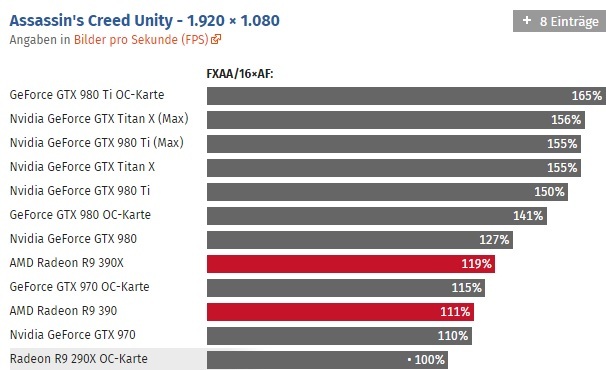
290/290x bych uz nebral.Oc bude pravdepodobne po zvyseni voltaze o dost lepsi jak u 290/290x nemluve o daleko rychlejsich pametech.Last but certainly not least however, we want to talk a bit more about the performance optimizations AMD has been working on for the 390 series. While we’re still tracking down more details on just what changes AMD has made, AMD had told us that there are a number of small changes from the 290 series to the 390 series that should improve performance by several percent on a clock-for-clock, apples-to-apples basis. That means along with the 20% memory clockspeed increase and 5% GPU clockspeed increase, we should see further performance improvements from these lower-level changes, which is also why we can’t just overclock a 290X and call it a 390X.
So what are those changes? From our discussions with AMD, we have been told that the clock-for-clock performance gains comes from a multitude of small factors, things the company has learned from and been able to optimize for over the last 2 years. AMD did not name all of those factors, but there were a couple of optimizations in particular that were pointed out.
The first optimization is that AMD has gone back and refined their process for identifying the operating voltages of Hawaii chips, with the net outcome being that Hawaii voltages should be down a hair, reducing power and/or thermal throttling. The second optimization mentioned is that the 4Gb GDDR5 chips being used offer better timings than the 2Gb chips, which can depending on the timings improve various aspects of memory performance. Most likely AMD has reinvested these timing gains into improving the memory clockspeeds, but until we get our hands on a 390X card we won’t know for sure.